
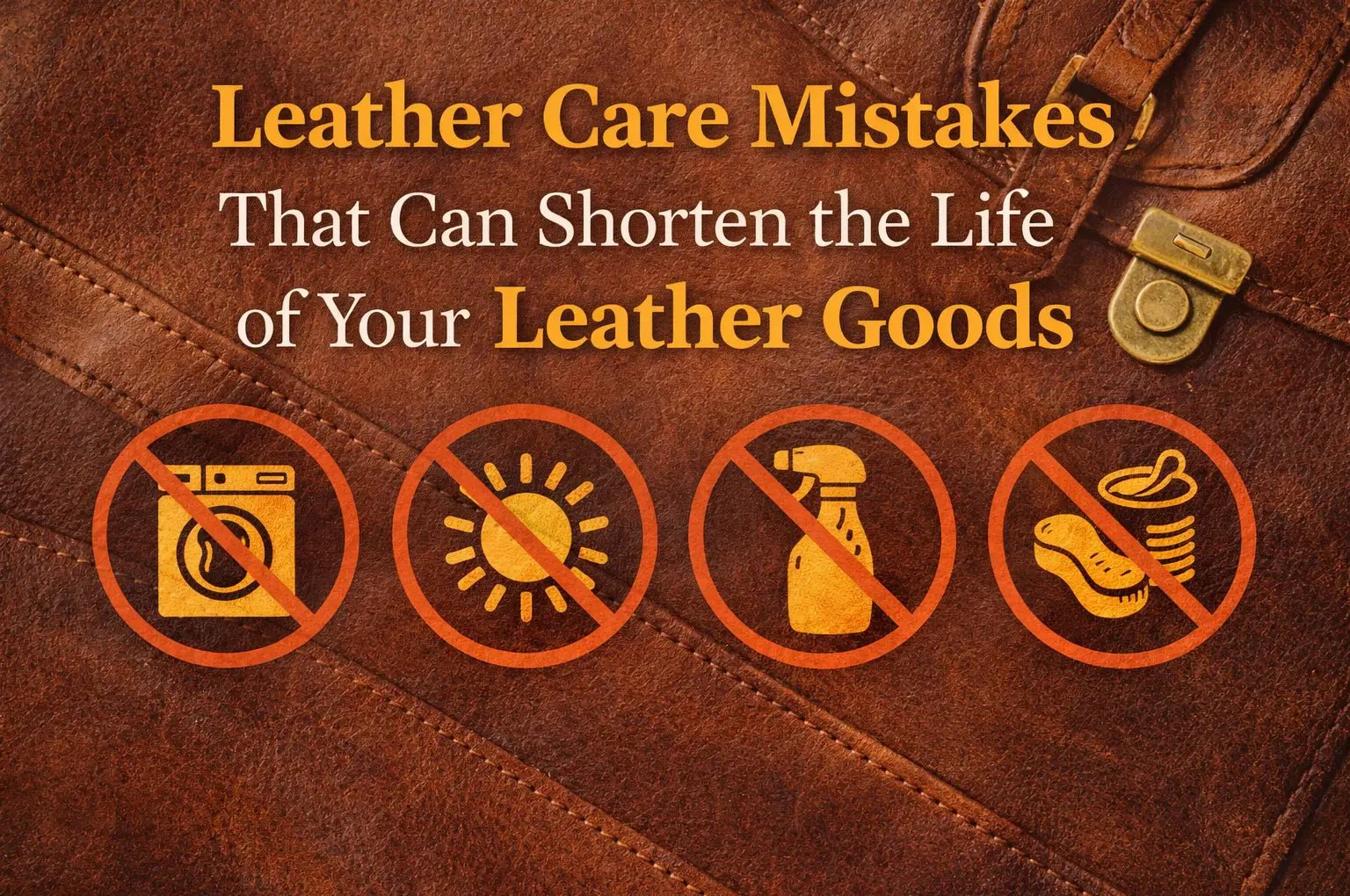
Common Leather Care Mistakes to Avoid

One of the reasons people love leather is that it does not stay flat and lifeless over time. It develops character. It softens, changes slightly in tone, and gradually takes on a look that feels more personal with use. That natural evolution is part of what makes leather so appealing.
But leather is also a material that responds to the way it is treated. When leather goods become stiff, faded, misshapen, or dull, the problem is not always the leather itself. In many cases, it comes down to everyday habits that slowly wear the material down.
If you want leather goods to last longer, good care matters. Just as important, though, is avoiding the kinds of use that quietly shorten their lifespan.
Leather Is Often Damaged Gradually, Not All at Once
Most leather damage does not happen overnight. It tends to build slowly through repeated exposure to moisture, heat, friction, pressure, and unsuitable cleaning methods.
Because the effects are gradual, they are easy to ignore at first. A little dryness, a slight change in shape, a faint loss of color, or small surface marks may not seem serious in the moment. But over time, those small issues can add up and affect the condition of the piece more than people expect.
That is why long-lasting leather care is not only about maintenance. It is also about avoiding the everyday habits that create unnecessary stress on the material.
1. Leaving Leather in Damp Environments for Too Long
Moisture is one of the most common and overlooked causes of leather damage. If leather is stored in a humid, poorly ventilated place for too long, it may begin to feel sticky, develop an unpleasant odor, or even show signs of mildew. In some cases, excess moisture can also affect the internal structure of the material.
This matters even more during rainy seasons, in humid climates, or when leather goods are stored away for long periods without use. Leather is best kept in a dry, well-ventilated space rather than inside sealed or poorly aired storage areas.
2. Drying Wet Leather Too Aggressively
If leather gets caught in the rain or becomes damp, the instinct is often to dry it as quickly as possible. Many people use a hair dryer, place it near a heater, or leave it in direct sun.
That kind of fast drying can do more harm than the moisture itself. High heat can pull too much moisture out of the leather too quickly, which may cause stiffness, shrinking, warping, or fine cracks.
A better approach is to blot the surface gently with a soft dry cloth and let the item air dry naturally in a cool, ventilated area. Slower drying is usually much safer for leather than forced heat.
3. Constant Friction and Pressure
Leather is durable, but it is not immune to wear. Repeated rubbing against rough surfaces, metal hardware, sharp objects, or coarse zippers can gradually leave scratches, edge wear, and loss of finish.
This is especially common with everyday items such as bags, wallets, key cases, and other frequently handled accessories. Even storage can become a problem if a leather item is compressed for too long or kept under heavy pressure, which may distort its shape or weaken certain areas over time.
A lot of leather aging comes not from dramatic damage, but from repeated friction that builds up little by little.
4. Color Transfer on Light-Colored Leather
Light-colored leather often looks especially clean, refined, and elegant, but it is also more vulnerable to color transfer. Dark denim, heavily dyed clothing, and unstable fabrics can sometimes rub off onto the leather surface after repeated contact.
Once dye transfer sets into leather, it is often harder to remove than ordinary dirt. That is why lighter shades usually need more awareness during daily use, especially when worn close to darker clothing or rough materials.
This does not mean light leather should be avoided. It simply means it benefits from more thoughtful use.
5. Using Household Cleaners on Leather
This is one of the most common mistakes people make. Leather may look sturdy, but it should not be treated like plastic, glass, or tile. Alcohol wipes, strong stain removers, disinfectant sprays, and harsh soaps may remove surface dirt quickly, but they can also strip away oils, disrupt the finish, and dry out the material.
The result may be fading, whitening, stiffness, or a surface that no longer feels or looks right. When dealing with stains, using a product made specifically for leather is usually the safer option. If you are unsure, testing a small hidden area first is always a better choice than taking risks with harsh cleaners.
6. Ignoring Leather When It Is Not Being Used
Many people assume that less use means less wear, but leather can also deteriorate while sitting unused. Long periods of storage can lead to dryness, trapped moisture, flattened shapes, or unwanted odors if conditions are not right.
A leather item stored away for months without attention may not come back out in the same condition it went in. This is why occasional airing out, gentle reshaping, and checking the storage environment can make a real difference, even for pieces that are not used often.
7. Treating All Leather the Same Way
Not all leather behaves the same. Smooth leather, waxed leather, nubuck, and suede all respond differently to moisture, friction, and care products.
A method that works well for one type may be completely unsuitable for another. For example, suede and nubuck usually do not respond well to standard leather creams or oils, since these can affect the texture of the surface.
Before cleaning or conditioning any leather item, it helps to know what type of leather it is. That one step can prevent a lot of unnecessary damage.
8. Mistaking Natural Change for Damage
People who are new to leather sometimes worry when they notice small changes in texture, tone, or surface character. But part of what makes leather special is that it does change. It responds to use, light, touch, and time.
A richer sheen, softer feel, or slightly deeper tone does not necessarily mean something has gone wrong. In many cases, these changes are signs of leather settling into use in a natural way.
As long as there is no clear structural damage, mildew, cracking, or severe discoloration, some visible change is simply part of the material’s character.
What Really Helps Leather Last Longer
Making leather last is not about over-handling it or constantly trying to restore it. In many cases, the best approach is simply to avoid the habits that cause unnecessary wear.
That means:
- keeping it away from prolonged dampness
- avoiding harsh heat and direct sun after exposure to moisture
- reducing repeated friction with rough or sharp objects
- using suitable cleaning products
- storing it properly
- understanding the specific leather type before treating it
These habits may seem small, but they often matter more than complicated care routines.
Leather Lasts Best When It Is Used Thoughtfully
Leather is one of those materials that rewards thoughtful use. It is not meant to remain untouched and identical forever. Its beauty often comes from the way it ages, adapts, and becomes more individual over time.
But there is a difference between natural wear and avoidable damage. When leather is used more carefully, stored more thoughtfully, and treated with a little restraint, it tends to keep its beauty much longer.
In the end, helping leather last is often less about doing more and more about avoiding the habits that wear it out too soon.

Leave a comment
This site is protected by hCaptcha and the hCaptcha Privacy Policy and Terms of Service apply.