

How Silk Is Made: From Mulberry Tree to Luxurious Fabric
Silk has been treasured for thousands of years. Its soft touch, natural sheen and quiet elegance make it one of the most desirable fabrics in the world. Behind this luxurious material lies a long tradition of craftsmanship, culture and patience.

Where Silk Comes From: The Mulberry Silkworm
Most natural silk comes from the mulberry silkworm (Bombyx mori). These silkworms feed on mulberry leaves and spin long, continuous filaments when forming their cocoons. A single cocoon can contain hundreds of meters of raw silk filament, which is why silk feels so smooth and uninterrupted. The quality of the silk depends on the purity of the leaves, the climate and how carefully the cocoons are handled.

How Silk Is Made: A Traditional Craft
Turning cocoons into fabric is a slow, precise process that has been refined over centuries. From raising silkworms to weaving finished cloth, every step requires care.
Sericulture and Harvesting
Farmers grow mulberry trees and raise silkworms in controlled spaces. When the worms have finished spinning their cocoons, each cocoon is collected and sorted by quality before it is processed.
Reeling the Silk
The cocoons are gently softened in warm water. This allows artisans to find the end of each filament and reel it off in long, continuous strands. Several filaments are combined to make a single silk thread strong enough for weaving.

Weaving and Finishing
The threads are spun, twisted and woven into fabric on traditional or modern looms. Different weaves create different looks—from smooth satin to crisp plain weaves. Silk absorbs dye extremely well, which is why colours on silk tend to look deep and luminous. Some heritage textiles, such as Xiangyunsha, use plant-based dyes and special finishing methods to create an even more distinctive character.

The Historical Meaning of Silk
Silk is closely tied to the history of the Silk Road, the network of trade routes that once connected China with Central Asia, the Middle East and Europe. Along with silk travelled ideas, art and culture. For centuries, silk garments and fabrics were signs of refinement, learning and status in many societies.

What Makes Silk So Special
Beyond its history, silk has a set of qualities that still feel unique today:
- Soft, breathable and lightweight on the skin
- Naturally insulating – cool in summer, gently warm in cooler weather
- A subtle, natural sheen that never looks plastic or flat
- Stronger than it looks, thanks to long, continuous fibers
- Comfortable for sensitive skin because it is a protein-based natural fiber
- Elegant drape that moves and flows beautifully

Silk in Modern Fashion and Accessories
Today, silk is used in everything from dresses and scarves to bedding and small accessories. Heritage silks like Xiangyunsha Silk give designers a way to blend traditional techniques with modern, minimalist shapes. The result is pieces that feel quiet, refined and full of character.

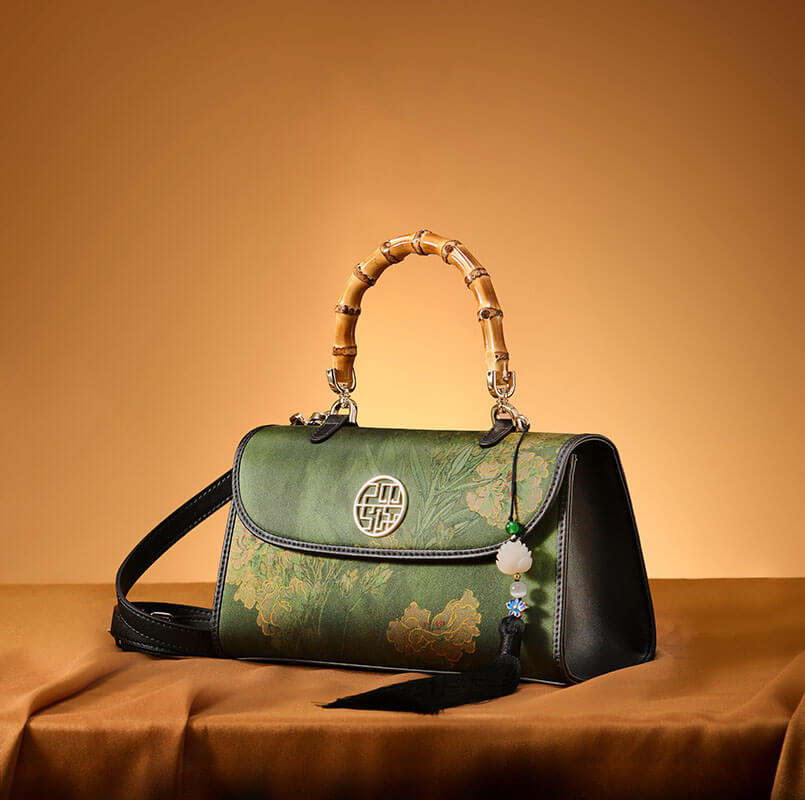
For us, silk-based materials are a natural match for Oriental-inspired handbags. They keep the designs lightweight while adding depth, texture and a subtle sense of heritage. A silk-lined handle, a softly shimmering flap or a panel of Xiangyunsha Silk can quietly change the whole feeling of a bag.
Closing Thoughts
From mulberry leaf to finished fabric, silk is the result of patience, skill and a deep relationship with nature. It has travelled across continents, carried stories for centuries and still feels timeless today. Whether worn as clothing or carried as a favourite bag, silk brings a quiet kind of beauty that never really goes out of style.
Leave a comment
This site is protected by hCaptcha and the hCaptcha Privacy Policy and Terms of Service apply.