
Jen Geigley Knits — DIY and the Handmade Life

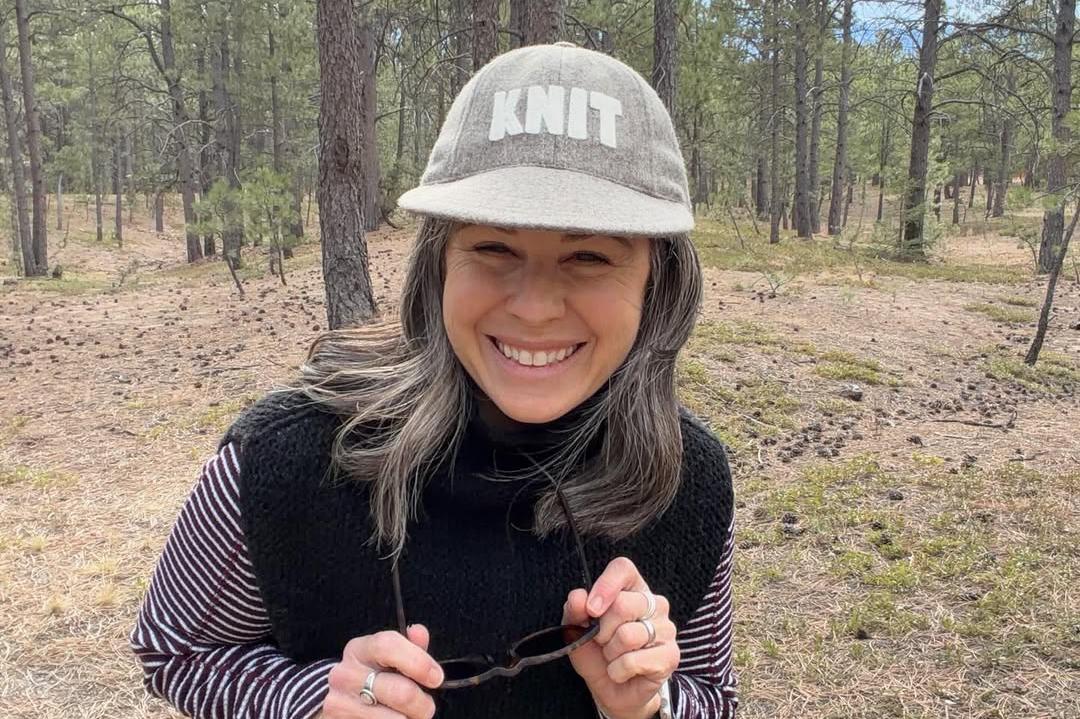
In the global landscape of modern knitwear design, Des Moines, Iowa, isn’t typically the first place that comes to mind as a fashion capital. Yet, it is here, in the heart of the Midwest—right next to the cornfields—that Jen Geigley (Youtube: Jen Geigley Knits; Instagram: jengeigley) has built a unique universe where traditional craft meets modern aesthetics.
A multi-talented creative working as a knitwear designer, graphic designer, best-selling author, and educator, Jen has built a creative life that brings together her Midwestern roots, a lifelong love of making, and interests that include punk music.
DIY has always been an important part of that creative life. Knitting, sewing, graphic design, and making things by hand have given Jen different ways to explore ideas and develop her own approach to design. Her love of punk and alternative music is another part of her creative world, alongside the craft traditions she grew up with.

Jen’s life and work are the harmonious products of these seemingly opposite forces. Her designs have graced the pages of premier industry publications like Vogue Knitting and Rowan Yarns, yet she remains deeply committed to passing the ancient art of knitting to the next generation—including neurodiverse youth—using the rhythm of the needles as a new medium for self-expression.
A DIY Spirit Rooted in the Midwest
The foundation of Jen Geigley’s life was laid in the vast fields and family traditions of Iowa. Growing up in a typical Midwestern small town with cornfields just outside her door gave her an innate affinity for natural materials—especially the raw, "woolly" textures of primitive fibers. However, Jen’s childhood was more than just a pastoral idyll; her grandmother, Minnie, was a profound influence.
A traditional craftswoman, Minnie taught a young Jen to sew and crochet, and invited her into the world of family quilting. Jen still vividly remembers hiding under the wooden quilting frame built by her grandfather, helping her grandmother and her friends push the needle back up through the quilt.

This early sensory experience of structure, texture, and the "temperature" of handmade goods became the cornerstone of her future design philosophy. This intergenerational heritage left her with a mental library of classic geometric patterns, like the Nordic Star, which still frequently appear in her knitwear designs decades later.
While receiving this warm, traditional education, the teenage Jen was simultaneously drawn to a very different energy: the DIY spirit of punk and metal. To find her subcultural tribe, she often traveled from her small town to the city for shows and like-minded friends. Alongside the craft traditions she grew up with, Jen also developed a love of punk and metal music. These interests became another part of the creative world she explored as she grew up.

Jen’s personal style also reflects her wide-ranging interests, from handknit wool pieces to graphic tees and darker, more urban looks. In her knitwear, she brings traditional craft into a clean and contemporary visual language.
Another turning point in Jen’s career was her formal training in graphic design. In design school, her professors emphasized the "process" above all else—a concept that became deeply embedded in her creative logic.
She learned how to start with sketches, moving through cycles of revision, rejection, and reconstruction until finding the perfect visual balance. Today, she uses professional tools like InDesign to craft her patterns, focusing on grid systems, typographic hierarchy, and the clarity of diagrams. This rigorous background sets her apart from amateur hobbyists.

When she writes her knitting books, she isn't just sharing stitches; she is using visual design principles to build an accessible, high-end aesthetic experience. Her time in the classroom taught her to justify every design decision: Why this fiber? Why this proportion? Why this white space? This pursuit of logic and function eventually evolved into her enduring design credo: "Less is more."
Accidental Success and the Leap to Full-Time Creative
If her early upbringing was a quiet accumulation of skills, the 2010 "Gaptastic Cowl" event was the spark that changed everything. Remarkably, Jen didn't truly master knitting until 2008, but her natural eye for aesthetics and graphic sensibility led to a rapid obsession.
In 2010, she posted a simple, textured cowl pattern on Ravelry, naming it the "Gaptastic Cowl." To her surprise, the pattern became a global sensation almost overnight. It remains one of the most popular and most-knitted projects on the platform, with over 20,000 completed versions on record.

This "accidental" hit made Jen realize that the market was hungry for designs that were stylish and modern yet intuitive to make. People didn't need complex stitches to prove their skill; they needed garments that fit their daily lives and made them feel proud of what they’d created.
Over the next decade, Jen embarked on a highly productive career. she published six knitting books, including Weekend, Everyday, and Visions, each exploring the connection between knitting and lifestyle. She became more than a pattern designer; she became a lifestyle advocate. She pioneered the concept of a "hand-knit capsule wardrobe," encouraging knitters to move away from chasing trends and instead invest in neutral, foundational, and durable pieces.
On her YouTube channel, she shares her entire process—from early sketches to the final garment—and speaks candidly about creative blocks, the exhaustion of late-night knitting, and moments of self-doubt. This authentic, unvarnished communication has led her followers to fall in love not just with her patterns, but with the honest, artistic life she represents.

In 2025, Jen made the bold decision to leave her stable corporate job and dive into her creative business full-time. For someone who had long balanced a "slashie" life as a designer, educator, and digital creator, it was a significant leap of faith. As she shared in her videos, she craved the time to build something truly her own—to deepen her designs, explore long-form content on YouTube, and start new book projects.
This transition is not only a release of her personal creative energy but a reflection of the rising status of modern artisans—they are no longer nameless figures behind a craft, but influencers who lead aesthetic trends and build independent, sustainable brands. At this stage, Jen has evolved from a "designer who loves to knit" into a mature leader of an international craft brand.
A Collaboration with Babylon Leather

Jen’s love for "making" has never been limited to soft fibers. Her curiosity for materials led to an exciting collaboration with Babylon Leather. For Jen, knitting is about the accumulation of lines, whereas leatherwork is about the shaping of structure and the play of strength.
She chose to complete the Babylon Leather Premium Saddle Bag DIY kit with her daughter, Lotus, turning the making process into a cherished mother-daughter moment. Lotus, a free and creative spirit herself, has grown up in her mother’s artistic atmosphere; the duo’s natural rhythm while handling tough leather and precision stitching perfectly aligned with Jen’s mission to "bring handmade back into daily life."
In Jen’s design philosophy, "accessibility" is key. Just as her knitting patterns allow beginners to create high-end sweaters, the Babylon Leather DIY kits break down the barriers of leathercraft through pre-cut pieces and detailed guidance.

In her social media shares, we see her styling the leather bag she made with her signature hand-knit sweaters. The combination of soft handknits and structured leather brings two different sides of making together in a way that feels completely at home in Jen’s handmade wardrobe.
A Moving Creative Landscape
When looking back at Jen Geigley’s story, her most moving work often happens away from the spotlight. Beyond her commercial success, she pours significant energy into community education, particularly her long-standing role as a mentor for the "Art Spectrums" program. At the Des Moines Art Center, she meets weekly with neurodiverse youth to build connections through art.

This work is deeply personal for Jen, as she lives in a family that celebrates neurodiversity. Having witnessed how individuals can challenge social prejudices through persistent effort, she believes in the healing and empowering magic of handcraft. In her classroom, knitting and art are not competitions of skill, but outlets for perceiving the world and releasing pressure.
Jen’s roadmap for the future remains centered on the act of "creation." As she enters this new phase as a full-time creative, her perspective has broadened. She is focused on building a more inclusive knitting community, using social media algorithms to spread "slow living" philosophies, and maintaining that pure essence of the Iowa fields in a globalized world.
Her story tells us that a true "influencer" isn't defined by a follower count, but by how their lifestyle and work give others the courage to try, to fail, and to create something beautiful with their own hands.

Whether through a meticulously designed knitting chart or a cross-disciplinary leather project, Jen Geigley continues to tell the world: in an age where machines can replace almost anything, only those things made by hand—carrying the warmth of the maker—can serve as our ultimate refuge against the mundane.

Laat een reactie achter
Deze site wordt beschermd door hCaptcha en het privacybeleid en de servicevoorwaarden van hCaptcha zijn van toepassing.