
Where We Knit— The Slow Living Aesthetic and Tactile Reclamation

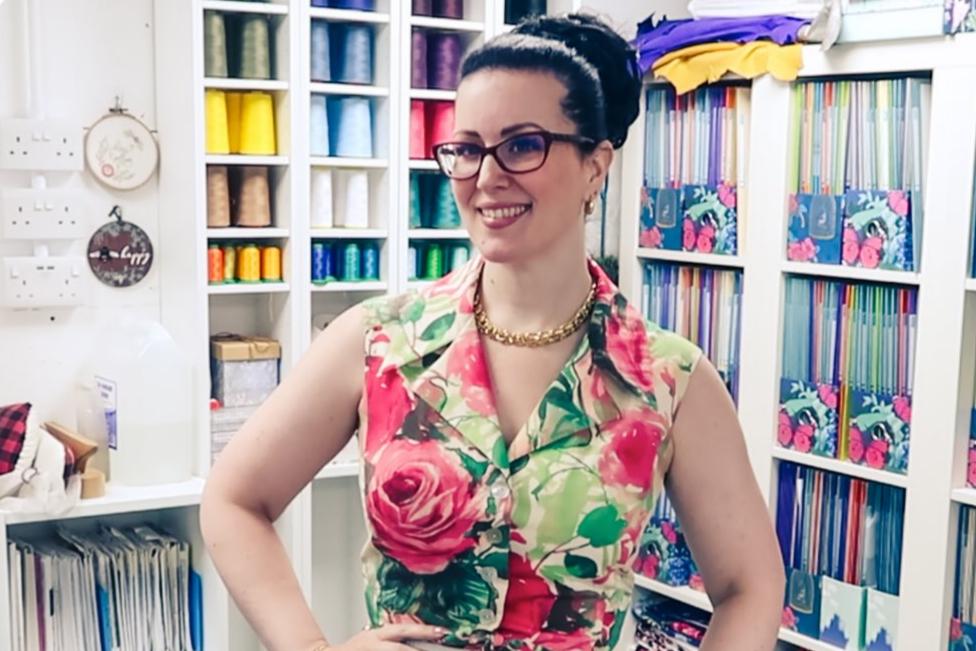
Where We Knit, a digital space hosted by Kristen. More than just a YouTube channel about knitting (Youtube: @whereweknit, Instagram: where_we_knit), it is a narrative sanctuary built between the warp and the weft. With a calm, professional, and deeply relatable presence, Kristen shows thousands of viewers how a single needle and a strand of fiber can stitch together a personal sanctuary amidst the fragments of a fast-paced life.
The core proposition of Where We Knit lies in the word "Where." As Kristen emphasizes in her teaching philosophy, a knitter’s environment—the geographic coordinates, the shifting light, and the atmosphere of their space—influences the tension of every stitch and the choice of every color. This keen sensitivity to "space" gives her work a profound sense of belonging.
Kristen’s Journey and the Imprint of Minneapolis

To understand the depth of Where We Knit, one must trace back to the pivotal moments in Kristen’s life. Her story is rooted in the cultural soil of the American Midwest, particularly Minneapolis—a city vibrant with artistic energy and a spirit of craftsmanship.
Her narrative is not a straight line of effortless success, but a series of transformations, reflections, and connections. A symbolic detail she often shares is her first job at sixteen in a tanning salon. This seemingly unrelated experience became a catalyst for her reflection on lifestyle decades later.

She candidly mentions the skin damage caused by her youthful pursuit of the sun; this "regret" taught her to examine the cost of time and eventually led her toward a gentler, more nourishing way of living. This transition from a "consumptive" life to a "creative" one is the source of the healing and restorative tones in her knitting philosophy.
Minneapolis is not just her residence; it is the physical anchor for her inspiration. She frequently shares "Minneapolis Updates," ranging from local craft fairs to deep engagement with social issues.
Kristen’s life is deeply supported by her local community, particularly her collaboration with her local yarn store (LYS), Dandelion Fiber Co. It is there that she sources premium fibers and connects with a community of like-minded makers.

Consequently, her work carries a distinct regional rhythm: seeking the warmth of wool during long winters and knitting light cotton and linen during the brief, vivid summers.
In her personal life, Kristen is surrounded by the warmth of family and a respect for tradition. She once shared a special recipe—a chicken pot pie—given to her as an engagement gift from her husband’s family, a culinary guide carrying generations of memories.
When she prepares this meal, she is essentially performing an act similar to knitting: interweaving fragmented ingredients, the weight of tradition, and personal innovation into a gift for her family.

Furthermore, Kristen’s identity is marked by a strong sense of social responsibility. She seeks peace at her needles but also actively engages in social justice, such as her involvement with Moms Demand Action to advocate against gun violence.
This engagement gives her work a certain "resiliency." For her, knitting is a way to maintain internal order in a turbulent world, while social participation is the attempt to extend that order outward.
From the "Cardigan Era" to "Home-Grown Knitting"
Kristen’s knitting philosophy can be summarized as "structured sensibility." As an educator, her logical approach to deconstructing complex patterns is highly regarded by her audience. She is not satisfied with simple, repetitive tasks; instead, she gravitates toward projects that stimulate "cognitive engagement."

She currently describes herself as being in her "Cardigan Era." To her, a cardigan is more than a garment; it is a metaphor for life—flexible and versatile, serving as a cozy cocoon at home or a protective layer against the cold outside. This preference reflects her pursuit of the ultimate balance between functionality and aesthetics.
In her choice of projects, Kristen demonstrates a profound understanding of material properties. For instance, in her Philomena Sweater, she masterfully balances the crispness of Cotton Glace with the ethereal halo of Kidsilk Haze, creating a piece that is both fluid and structured.
In her Cloud Sweater, she combines Merino with Suri Silk to achieve a luminous, "glowing" effect. Her attention to stitch definition is almost surgical; this obsession with detail is why she can transform simple yarn into a "fluid monument of life."

At a deeper level, Kristen’s "Handmade Wardrobe" concept is a gentle resistance against modern hyper-consumption. Every skein she chooses, such as fair-trade cashmere from June Cashmere, embodies a respect for distant producers and the environment.
She believes that if you knit your own clothes, you establish a connection that money cannot buy. This bond ensures that clothing is no longer a disposable commodity, but an extension of the skin and a statement of self-identity.
When Traditional Knitting Meets Babylon Leather
In working with Babylon Leather (get the same kit), Kristen showed an effortless adaptation to the sequence of the craft. Babylon’s systematic and methodical approach perfectly aligns with her logical mindset as an educator.

Drawing on decades of handcrafting experience, she translated the rhythm of knitting into the cadence of leatherwork. This leap from soft fiber to firm leather is essentially an exploration of "durability."
She found that when a hand-knit sweater is paired with a hand-stitched Babylon leather bag, the "Handmade Wardrobe" truly comes full circle—a complete life system of warmth and structural support.
This collaboration also serves as a metaphor for the modern woman’s search for a "resilient balance" between career, family, and passion. In Kristen’s view, every precise punch and every controlled pull in leatherworking is like a psychological experiment in setting life’s boundaries.

This interdisciplinary approach not only enriches her work but also communicates a core value to her audience: handcraft should not be an ornament to life, but its backbone. Through Babylon’s beginner-friendly designs, she successfully lowered the barrier to entry, proving that "craftsmanship" transcends material.
Knitting as a Form of Existence
Looking back at Kristen’s journey with Where We Knit, we find that it is more than just a story about a hobby; it is a story about existence. From the cold streets of Minneapolis to the warm glow of Dandelion Fiber Co, Kristen proves that handcraft is not an obsolete labor, but a way to anchor oneself in a fast-changing world.

Her cardigans, her Philomena sweaters, and her hand-stitched Babylon leather pieces together form the touchable memories of her life. Her influence has transcended the knitting community to become a beacon for a lifestyle.
She encourages us to turn off our screens, pick up our needles, feel the roughness and the silkiness of materials, and respect the time required for every row. For Babylon Leather, Kristen is more than a creator; she is a "translator of tradition," turning ancient wisdom into spiritual nourishment for the modern woman.

,%20it%20is%20a%20narrative%20sanctuary%20built%20between%20the%20w...)
Laat een reactie achter
Deze site wordt beschermd door hCaptcha en het privacybeleid en de servicevoorwaarden van hCaptcha zijn van toepassing.